Robert Altman’s “Quintet” (1979) is an eerie, vivid nightmare that begins with the camera panning over a vast, white snowscape, showing us a train long abandoned.
It’s a post-apocalyptic world that, we learn later, has resulted in a planet of unceasing cold and winter weather that few can survive. This is “Mad Max” (1979) in reverse, a world smothered in snow and ice, with wolves always nearby to consume the dead.
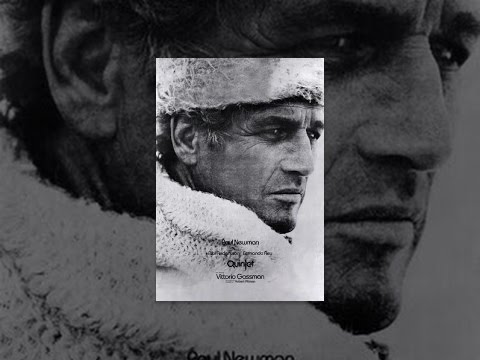
Paul Newman stars as Essex, a survivor who wanders through the vast wilderness with his wife (Bridgette Fossey) into a massive structure (filmed inside the abandoned Expo ’67 complex in Montreal). Five million human survivors inhabit this place, with its layout provided by maps consisting of number and color codes.
Inside this structure are large photographs of humankind, hung for inspection, appearing to be reminders of what civilization used to be. What do the survivors do? They sit around and play a board game called Quintet and contemplate murdering one another.
The human survivors are adorned in capes and heavy clothing, looking like inhabitants of “Dune” or attendees of a Renaissance Festival. This new version of human civilization is still driven by survival and beholden to established traditions.
Yet, the shared passion among the few remaining humans is winning at Quintet and surviving another day. In other words, even with the snowy setting, Altman has made another western.
Shot in Montreal on a $7 million budget, this certainly has the feel of a western, albeit one caked in snow and frost, wrapped in take-it-or-leave-it surrealism. Altman is exploring existentialist themes, asking us if we’re all just gamer players awaiting mortality?
Despite the slow pace (the thing most cite when saying they hate this movie), Altman’s film is entertaining- more so than being leisurely paced, its real crime is being profoundly strange.
Altman made this in between “A Wedding” (1978) and “A Perfect Couple” (1979). What came after “Quintet” was “Popeye” (1980), the box office hit that was critically panned and led to years of hit and miss indie films, until “The Player” (1992) and a slew of great films that followed, gave him one of the all-time best comebacks for a filmmaker.
RELATED: WHY ALTMAN’S ‘PLAYER’ HASN’T AGED A MINUTE
In terms of looking at a long career with drastic ups and downs that came out of taking wild risks on personal material, I’d compare Altman’s trajectory to M Night Shyamalan’s. if “Quintet” was Altman’s “Lady in the Water” (2006) then “The Player” was his “Split” (2016 – my apologies to Shyamalan enthusiasts).
To put it another way, it’s a rare pleasure to see a filmmaker take a chance on their visions, even when their dreams aren’t as interesting to us as they are for them. Altman and Shyamalan never made the same movie twice, and their best films show them taking narrative and tonal risks.
“Quintet” is not on the level with “M.A.S.H.,” “The Player” or “Short Cuts,” but it is, likewise, an original, risk-taking and personal story from a great American filmmaker. Not everything Altman made was great, but even something as out-there as “Quintet” needs to be seen and picked over.
Altman’s film is endlessly fascinating, a visionary work that aligns itself with subsequent works of post-apocalyptic survival. However, when the film was released in 1979, it was ahead of its time, as the only mainstream Hollywood film it truly compared to was “Planet of the Apes” (1968) and this one lacked the novelty of actors wearing simian masks.
Some prior B-movies had also explored the topic, notably the Richard Denning vehicle “Day the Earth Ended” (1955) and a few others. Yet, this was a long way from the days where the pessimism of “The Terminator” (1984) or “The Book of Eli” (2010) would become its own subgenre.

Altman’s film was something truly novel. It is also one of his worst-reviewed films and was almost universally despised by audiences and critics upon release.
Considered a major blunder in ’79, time has caught up with the film, which now plays as a perfect double feature, if not a thematic grandfather, to films like “Snowpiercer” (2013), longform dramatic TV series like “The Walking Dead” (2010-2022) or “The Last of Us” (2023-present ), though minus the zombies, and even the costumed politics of “Game of Thrones” (2011-2019).
The silliness of the film is unavoidable, not just in the far-out premise, but the contrast of the King Henry V-era costumes and phrases like the drinking of “booza.”
How Quintet is played is never explained.
I once showed this to a college film class, where a student who identified himself as a passionate D&D player said he’d watch the film closely and explain the rules. At the end of the screening, he said he had no idea, as the film never really tells us how Quintet is played, only that it’s a life-or-death game.
According to Patrick McGilligan’s 1989 book, “Robert Altman- Jumping Off a Cliff,” “Altman seemed excited about merchandising the possible game- which he believed was going to be another Monopoly- as he was about the film story.”
If only he told us how the heck the game was played!
Made during the days of coin operated video games, Altman suggests that games and gaming will be a passion that keep us going after most of us are gone. He’s probably right.
What does it say about the human race that, after we survived the end of the world, what we would probably do to pass the time is survive, play games and murder when necessary?
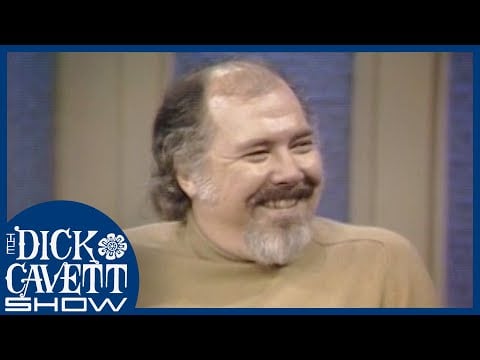
A great score by Tom Pierson gives this story its epic grandeur but also a consistent feeling of dread. Altman designed the cinematography to allow the edges of the screen to appear fuzzy in every scene. Why? Perhaps to convey a lens frosting over, or to suggest that what we’re watching is a dream.
After all, like Altman’s “3 Women” (1977), the vision of “Quintet” came to him in a dream. Altman also admitted publicly that he was grieving over the death of his father, which took a toll on his mindset during filming.
Altman and Newman reteamed for this after “Buffalo Bill and the Indians, or Sitting Bull’s History Lesson” (1976). What an act of faith on Newman’s part to take this on!
While Newman has publicly been kind with his words regarding Altman, McGilligan revealed that “Newman is said to thunder with vulgar phrases whenever the film is mentioned.”
Later, in Mitchell Zuckoff’s 2009 book, “Robert Altman – The Oral Biography,” Newman is directly quoted as stating the following on “Quintet”:
“I think ‘Quintet’ was a valid supposition, but I think the details just got away from us. There weren’t enough details to pile on top of each other to support that as a dramatic supposition. It’s a complicated supposition, you understand. It’s the end of the world and if you’re going to go out, you might as well go out with some excitement. So, the excitement is you track down the guy in front of you and kill him. But you also know there’s a guy in back of you, who’s trying to kill you. You might have gotten that on the second viewing, but most people only get a first. You have to be looking straight ahead but you have to be looking in back of you, too.”
Newman concluded his commentary with this gem:
“I don’t think you have to go out to kill for excitement to keep feeling alive, though (Altman) may have felt that way about the critics.”
The post ‘Quintet’: Altman’s Post-Apocalyptic Gamble Demands a Revisit appeared first on Hollywood in Toto.