Dan Curtis’ “Burnt Offerings” (1976) is a unique haunted house thriller, as the villain isn’t a ghost but a house with the ability to unhinge a happy family.
The supernatural quality of the film is made evident in the tour de force final scene (more on that showstopper later), but the film is, refreshingly, not about the things that go bump in the night by means of a pesky spirit. Instead, this is more relatable, dealing with how a new home and a different environment can be more than some can handle.
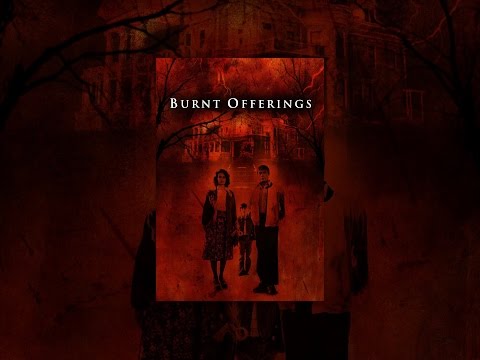
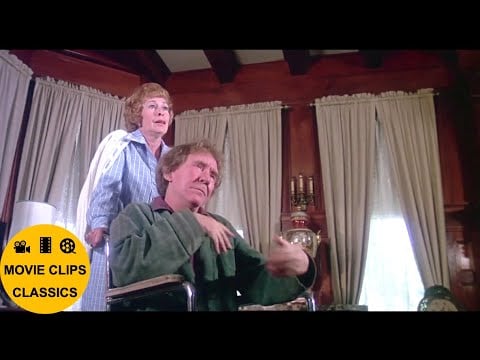
Karen Black and Oliver Reed are Ben and Marian Rolf a married couple who, along with their son Davey (Lee H. Montgomery) move into an isolated mansion they are renting for the summer. The owners are the Allardyces, wonderfully played by Burgess Meredith and Eileen Heckart, who are so dotty and strangely chipper, it should have given the Rolfs an early warning that they need to run in the opposite direction.
Nevertheless, the Rolfs, including the grandmother, played by the legendary Bette Davis, move in and find that things are immediately off. Among the strangest touches – there’s someone who lives upstairs, never leaves her bed and only Marian has seen her.
Curtis’ film reminds me of the striking 1978 Anne Rivers Siddons’ novel, “The House Next Door” more than “The Amityville Horror” (1978), which unfairly gets compared to this movie simply because they were released within years of one another.
Actually, Curtis’ brand of gothic horror and a tortured family dynamic, explored in his groundbreaking and delicious vampire soap opera, “Dark Shadows” (1966-1971) seems in line with what goes on in “Burnt Offerings.”
The two are both of the horror genre but have completely different storytelling approaches.
The house becomes an all-encompassing obsession that transfixes the family, a nice twist on a genre that peaked with Robert Wise’s 1963 “The Haunting” and is always in need of a revision or unusual spin. Curtis’ unusual, haunted house tale is a quaint, slow burn most of the way, until it gets really wild and concludes in a truly insane manner.
Until then, this matches the pacing of his “Dark Shadows.” Curtis takes his time telling tales.
Black is excellent, and Davis is wonderful, near the start of her post-“Baby Jane” reign as a horror regular (Davis’ unsettling turn in the TV movie “The Dark Secret of Harvest Home,” released the same year, is another buried treasure for fans).
It’s funny to see Reed playing a bespeckled, doomed dad the very same year as his wild turn in Ken Russell’s “Tommy,” where he played the title character’s dangerous stepfather.
Based on the 1973 Robert Morasco novel, “Burnt Offerings” is post-“The Haunting”, pre-“The Amityville Horror” (1979) and well before the game-changing “The Shining” (1980) and “Poltergeist” (1982). There is, however, a striking similarity in how “Burnt Offerings” and “The Shining” conclude, as both have epilogues in which the camera lingers on tell-tale photographs.
Curtis’ film is far from perfect, as there are, of all things, too many pool scenes and it visually looks like it was made for TV.
Then there’s the ending, which I won’t spoil. “Burnt Offerings” has a jolt of a big reveal, a hilarious, over-the-top twist on top of that, a wicked conclusion and a closing image that makes me wonder if anyone involved in the making of “The Shining” saw this one first.
The best thing about “Burnt Offerings” is the unusual spin it offers on the haunted house genre and, undoubtedly, there’s no way you’ll ever forget those final moments.
The post ‘Burnt Offerings’ at 50: The House That Haunted Us appeared first on Hollywood in Toto.