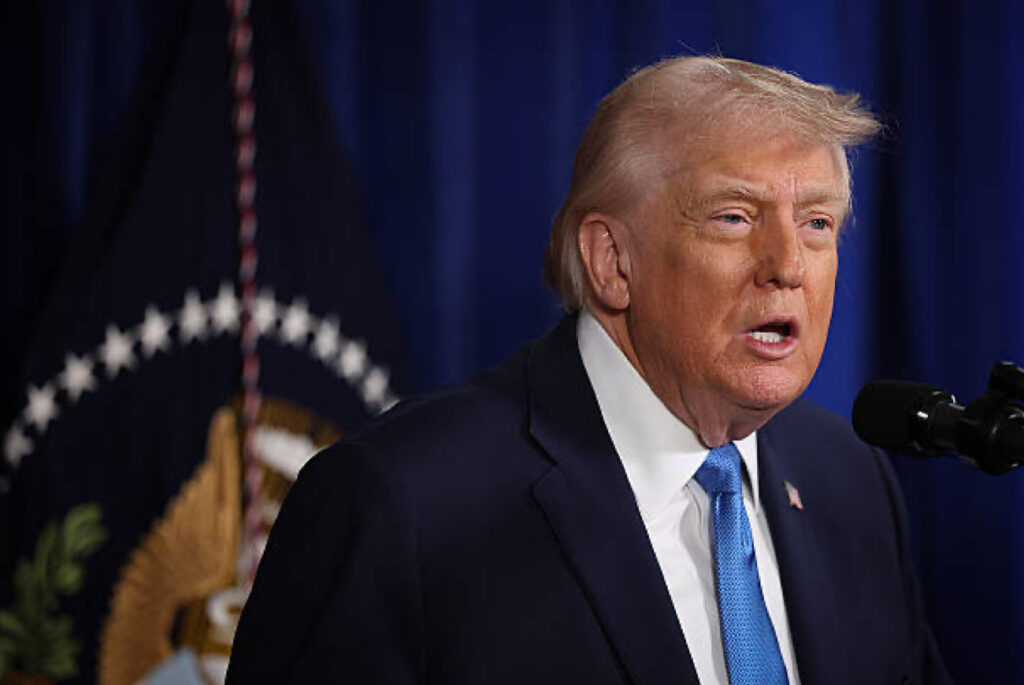
Donald Trump Speaks Out After The Senate Votes To Limit The President’s Further Attacks On Venezuela: ‘Republicans Should Be Ashamed’
The U.S. Senate voted to advance a bipartisan resolution that would restrict the president from using military force “within or against Venezuela” without prior approval from Congress. The procedural vote passed 52–47, following an unsuccessful effort by Republican leadership to block the measure.
The resolution is based on the War Powers Act and is intended to limit the president’s authority to initiate further military action related to Venezuela without congressional authorization. The vote took place amid ongoing discussion by the administration regarding additional actions toward the South American nation.
The measure advanced after they publicly discussed a potential “second wave” of action involving Venezuela. The president previously ordered military action aimed at capturing and extraditing Venezuelan’s leader and stated that the United States would temporarily govern the country following that operation.
Senate Vote Advances War Powers Resolution on Venezuela
The vote to advance the resolution followed debate over presidential authority and congressional oversight of military action. Five Republican senators joined all 47 Democrats in supporting the motion, allowing it to move forward to a full Senate vote scheduled for next week.
The resolution does not immediately become law. It must still pass the full Senate by a simple majority, receive approval from the House of Representatives, and be signed by the president. If enacted, it would formally limit the president’s ability to carry out additional military operations involving Venezuela without congressional consent.
Lawmakers backing the resolution stated that the measure is intended to reaffirm Congress’s constitutional role in decisions related to military force. Opponents argued that it could restrict the president’s ability to respond quickly to national security threats.
Trump Responds Following Senate Action
Following the vote, President Trump responded on his social media platform, criticizing Republican senators who supported the resolution. He wrote:
“Republicans should be ashamed of the Senators that just voted with Democrats in attempting to take away our Powers to fight and defend the United States of America. Susan Collins, Lisa Murkowski, Rand Paul, Josh Hawley, and Todd Young should never be elected to office again. This Vote greatly hampers American Self Defense and National Security, impeding the President’s Authority as Commander in Chief. In any event, and despite their ‘stupidity,’ the War Powers Act is Unconstitutional, totally violating Article Il of the Constitution, as all Presidents, and their Departments of Justice, have determined before me. Nevertheless, a more important Senate Vote will be taking place next week on this very subject.”
The president’s statement reflects continued opposition to congressional efforts aimed at limiting executive authority under the War Powers Act.
What Happens Next in the Legislative Process
The resolution will now proceed to a full Senate vote, which is expected to take place next week. If passed, it would then move to the House of Representatives for consideration. Even if approved by both chambers, the measure would still require the president’s signature to become law.
Given the president’s stated opposition, the likelihood of the resolution being signed remains uncertain. However, the Senate vote signals bipartisan concern regarding executive authority and military involvement in Venezuela.
Lawmakers have indicated that the upcoming vote will further clarify where Congress stands on future U.S. actions involving Venezuela and the broader application of the War Powers Act.