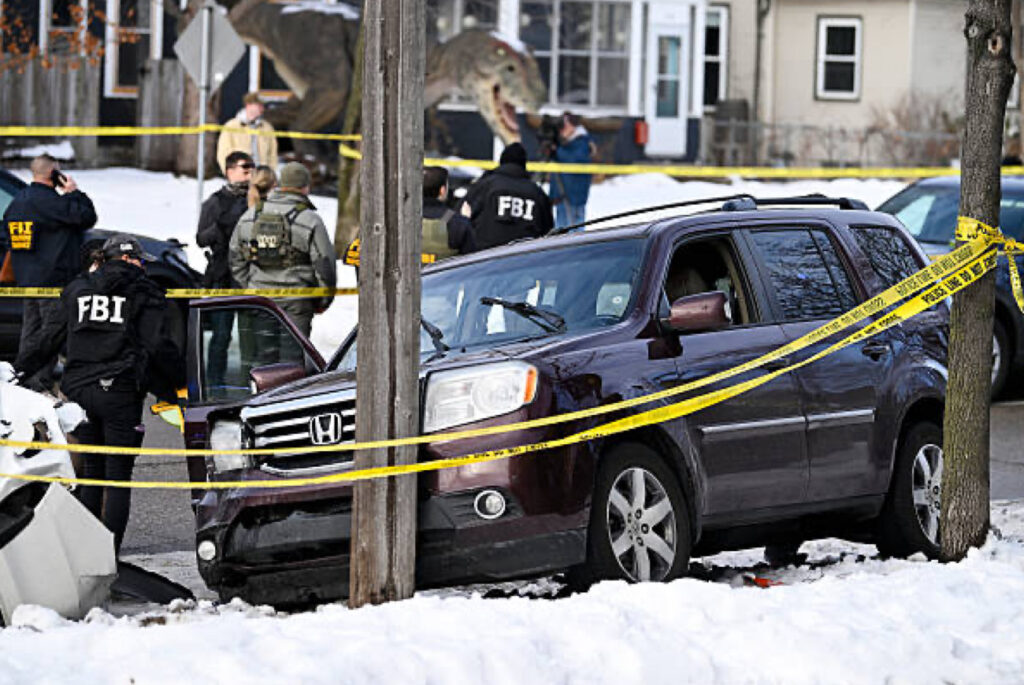
An Immigration and Customs Enforcement agent shot and killed a woman sitting in her car during federal operations in Minneapolis on Wednesday, according to the Department of Homeland Security. The shooting has since sparked outrage across the city and raised serious questions about federal enforcement tactics operating within local communities.
According to DHS spokesperson Tricia McLaughlin, the woman was allegedly “attempting to run over our law enforcement officers” when an ICE agent fired the fatal shots. That explanation, however, is being strongly challenged by city leadership after video footage of the incident was reviewed.
Minneapolis Mayor Jacob Frey said publicly that what he saw did not match the federal government’s account. Instead, he described the incident as a reckless use of power that ended a life unnecessarily.
“This was an agent recklessly using power that resulted in somebody dying — getting killed,” Frey said. The woman was later identified as a 37-year-old U.S. citizen who was not under investigation and not the target of any law enforcement activity. Minneapolis police confirmed that she was in her car at the time of the shooting and had no known criminal involvement tied to the federal operation taking place.
City officials say the presence of Immigration and Customs Enforcement has already been a source of fear and tension in immigrant communities. This incident, they argue, represents the worst-case scenario they had long warned about.
Mayor Frey said he personally reviewed video footage of the shooting and came away deeply disturbed. According to him, the video did not support the claim that the woman posed an immediate threat to federal agents.
Frey stated that it did not appear the woman was using her car as a weapon. Instead, city leaders believe she was acting as a concerned resident watching out for others in her community during a tense federal operation.
Minneapolis City Council member Jason Chavez described the woman as “an observer” who was “watching out for our immigrant neighbors.” That framing sharply contrasts with DHS’s initial justification and has fueled demands for accountability and transparency.
Minneapolis police later clarified that the woman was blocking the roadway in her vehicle. According to their statement, “At some point, a federal law enforcement officer approached her on foot, and the vehicle began to drive off.” Police confirmed that “At least two shots were fired … the vehicle then crashed on the side of the roadway.”
They further added, “There is nothing to indicate that this woman was the target of any law enforcement investigation or activity.” Authorities also confirmed that “… She appears to be a middle-aged white woman.”
For city leadership, the issue goes beyond this single incident. It speaks to the broader consequences of aggressive federal enforcement operating within cities that have made clear they do not support ICE’s presence.
“Get the F— Out”: Frey’s Message to ICE and the City’s Breaking Point
Mayor Frey did not mince words when addressing ICE’s presence in Minneapolis. His message was blunt and emotional, reflecting a city that feels pushed past its limit.
Frey’s message to ICE was clear: “get the f— out” of Minneapolis. “We’ve dreaded this moment since the early stages of this ICE presence in Minneapolis,” Frey said.
City officials argue that this tragedy validates long-standing fears that ICE operations increase danger, not safety. Community leaders say residents should not have to fear being killed simply for being present during a federal operation in their own neighborhood.